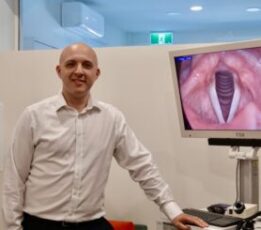
There are different types of vocal surgery for different types of laryngeal conditions
- Following vocal cord (fold) surgery involving removal of a lesion, it is generally recommended that you rest your voice completely for approximately 3-5 days. If surgery involves augmentation/filler, then 1-2 days rest is usual. (Please note the exact time can vary and more precise recommendations will be given by your surgeon after the procedure)
- When you recommence talking, it is still important to have regular voice rest periods over the day (relative voice rest) and maintain a reduced vocal load (approximately 10-40%) and avoid loud speech for the first week post-operatively.
- If you feel discomfort or deterioration in quality on voicing, please desist from voicing until this abates or you see the speech pathologist
- Intensive voice therapy with a Speech Pathologist is recommended to commence within a week or so after surgery. It is important for your optimal outcome that you keep your voice therapy appointments post-surgery.
- You will also have a post-operative review at the Clinic with your surgeon, to ensure that healing is proceeding in an uncomplicated manner.
- On average, most people require a minimum of three voice therapy sessions to optimise recovery.
- The aim of therapy is to encourage “good vibrations” of your vocal cords.
- This involves Vocal Exercises and Vocal Health Optimisation
-
Vocal exercises involve creating and maintaining a healthy sound by repeating exercises regularly in order to:
- Reduce vocal fold swelling (oedema)
- Massage the vocal folds
- Minimise any potential vocal fold scarring
- Promote efficient voice production in the future
- You will be given an exercise program which is essential for the first one to two weeks post-surgery. Your exercises will be guided by your Speech Pathologist, and usually include the following, at a comfortable pitch:
- Altering the focus of resonance –i.e. Resonant Voice Therapy, Humming, Nasals
- Impedance therapy i.e. Lip trill / tongue trill
- Sustaining fricatives such as /vvv/ and voiced sounds
- It is recommended that you complete these exercises 4-6 times a day for short, regular periods, for example, 10 minutes.
2. Vocal health advice should be followed, such as:
- Increasing/maintaining adequate water intake
- Reducing/eliminating throat clearing
- Not speaking over background noise and avoidance of strain
- Your Speech Pathologist will also help you make decisions about your ongoing ‘vocal load’ upon your first post operative consultation, and may suggest that you reduce the amount that you speak to 30%, for example
- Based on your Surgeon’s recommendations and your post-operative healing, your Speech Pathologist will also help you to determine the suitability of you returning to work or any restrictions
Remember, Good Vibrations!!